Notes from a Fertilizer Forum
by Brian Harrington
 On a Saturday evening in late August the Plymouth Stewardship Alliance held a forum which included units on choosing and using fertilizers, some groundwater education, and recommendations for choosing native vegetation for grounds and gardens. There was a lot of information, so I am aiming to give you some of the “take home” messages that I heard.
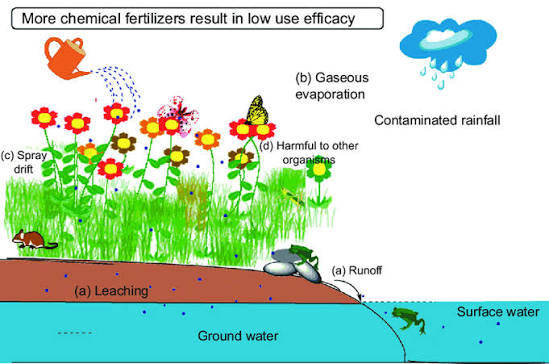
As for fertilizers, Walter Morrison suggested being very careful in choosing and using your fertilizers and strictly following their application instructions. Lawn and garden fertilizers are different. Chemically manufactured fertilizers tend to leach more rapidly into ground water and so have less uptake by vegetation, causing more environmental harm compared to more organically based fertilizers. Look for brands that do not have urea (manufactured from petroleum products) in their formula, and consider looking for non-plant food ingredients such as certain bacteria that can benefit your soil. Importantly, avoid over-using fertilizers.
Peter Schwartzman spoke about how fertilizers can affect ground water, including water in our ponds and lakes, and so then contribute to degradation and eutrophication events such as cyanobacteria blooms. Phosphorus tends to most harmfully tip the “eutrophication scale” in groundwater including ponds and lakes, whereas nitrogen is more often the culprit in marine waters. A variety of factors influence how chemicals like nitrogen and phosphorus infiltrate our waters including soil porosity (our sandy soils tend to be more porous), rainfall intensity (higher intensity leads to higher runoff; rainfall intensity is increasing with climate change), and the speed with which phosphorus (relatively slow) and nitrogen (relatively fast) can move through soils.
Love Howard spoke about native plants for gardens and why it generally is better to use native species in our gardens. Bottom line, the main reason is that they are adapted to thrive in our soils and climate, and because they bolster native insects which, in turn, are adapted to these species of plants. Our insect numbers have declined drastically; this in turn results in a scarcity of our native pollinators, which in turn leads to a deprived ecosystem that all life, including human life, depends upon. She recommends minimizing use of fertilizers and all pesticides. She notes that many pesticides are applied as aerosols, that they drift in the wind, and kill insects – including beneficial species—indiscriminately on a broad scale.
Comments
Notes from a Fertilizer Forum — No Comments
HTML tags allowed in your comment: <a href="" title=""> <abbr title=""> <acronym title=""> <b> <blockquote cite=""> <cite> <code> <del datetime=""> <em> <i> <q cite=""> <s> <strike> <strong>